Nils Flores · 25 October 2026
Material Price Volatility Prompts Revised Budgeting in Compact Warehouse-to-Office Projects
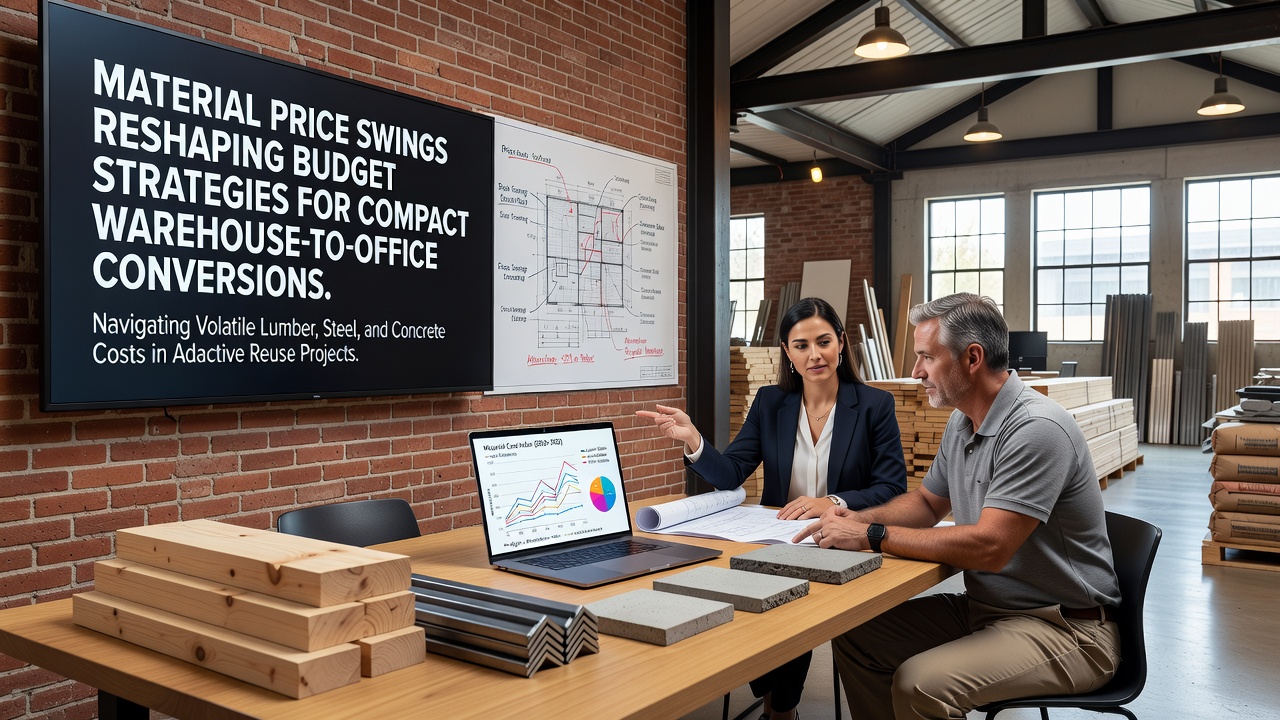
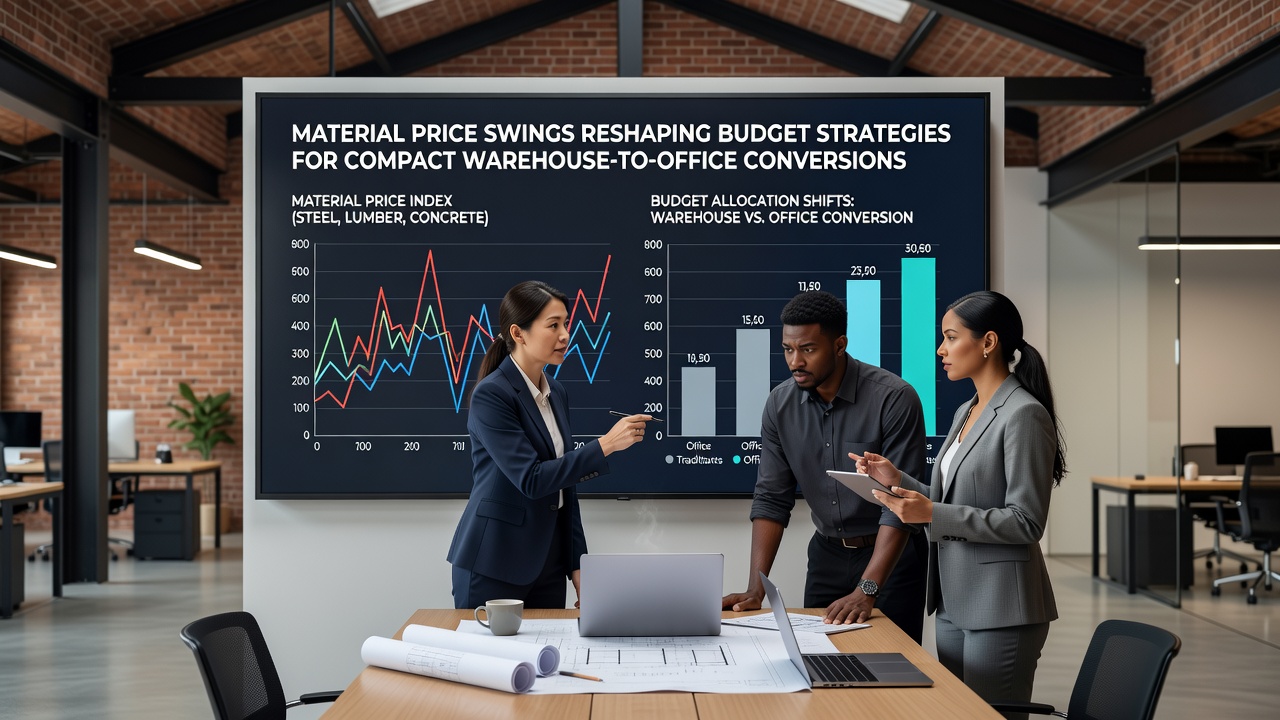
Material price swings have altered how project teams approach budgeting for compact warehouse-to-office conversions, with data from industry tracking services showing steel prices rising 18 percent between early 2025 and October 2026 while lumber costs dropped 12 percent over the same period. These movements force planners to adjust line items more frequently and to lock in supplier agreements earlier in the design phase. Observers note that teams working on spaces under 15,000 square feet now build contingency reserves averaging 15 percent of total material budgets, compared with 8 percent in 2023.
Tracking Specific Material Shifts
Steel framing and metal decking represent the largest single cost category in many compact conversions, and recent figures from the U.S. Bureau of Labor Statistics document month-to-month changes exceeding 6 percent on multiple occasions since mid-2025. Copper wiring and piping followed a similar pattern, with prices climbing steadily through the third quarter of 2026. Concrete and drywall supplies showed smaller but still noticeable swings, prompting estimators to review supplier quotes every two weeks rather than once per quarter. Researchers at the University of Melbourne documented comparable volatility in Australian markets, where imported steel products increased 14 percent in the twelve months ending October 2026.
Budget Strategies Under Revision
Project managers now insert price-escalation clauses into subcontractor contracts that trigger automatic adjustments when material indices move more than 4 percent from the bid date. Some firms pre-purchase long-lead items such as structural steel and HVAC units as soon as schematic designs receive approval, then store the materials on-site or at bonded warehouses. Others adopt modular construction sequences that allow portions of the work to proceed with materials already secured while remaining sections wait for more favorable pricing. Data from the Canadian Construction Association indicates that projects using this phased procurement method completed within 3 percent of original budgets in 2025, compared with a 9 percent average overrun on projects that ordered materials only after permits were issued.
Regional Examples and Timeline Adjustments
In the Pacific Northwest, one conversion team working on a 9,000-square-foot former cold-storage facility shifted from open-web steel joists to engineered wood products after lumber prices fell relative to steel in spring 2026. The change required redesign of mechanical routing but reduced projected material costs by 11 percent. European teams converting small logistics buildings near Rotterdam adopted similar tactics after the European Commission published updated construction cost indices in September 2026 that highlighted ongoing aluminum shortages. These adjustments extended design phases by an average of three weeks yet kept overall schedules intact because early material commitments reduced later delivery delays.
Financing and Insurance Implications
Lenders have begun requiring sensitivity analyses that model material price increases of 10, 20, and 30 percent over the construction period. Insurance carriers offering builder's risk policies now review procurement schedules before issuing coverage, and some carriers offer premium discounts when contractors demonstrate fixed-price contracts for at least 60 percent of major materials. A 2026 study from the Politecnico di Milano found that Italian conversion projects with such coverage completed 22 percent closer to original cost estimates than projects without pre-committed pricing.
Technology Tools Supporting Adjustments
Cloud-based estimating platforms now integrate live commodity feeds so that quantity takeoffs update automatically when prices change. Teams receive alerts when any line item exceeds a preset variance threshold, allowing immediate value-engineering discussions. Several software providers added scenario-modeling features that let users toggle between material alternatives and instantly recalculate both cost and schedule impacts. Adoption of these tools increased among firms handling warehouse conversions after October 2025, according to industry association surveys.
Conclusion
Material price volatility continues to shape budgeting practices for compact warehouse-to-office conversions through 2026, with teams responding through earlier procurement, contract clauses, and digital monitoring systems. Data from multiple regions shows measurable reductions in cost overruns when these approaches are applied consistently. The pattern suggests that ongoing price tracking and flexible procurement will remain standard components of project planning in this sector.